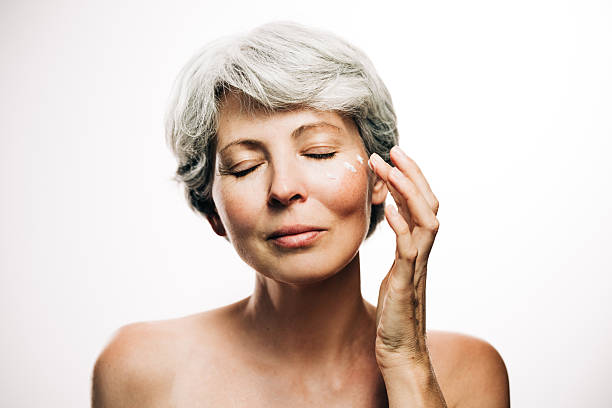
You’ve done everything right. Sunscreen every morning, a decent moisturizer, maybe a retinol at night. Yet one day you catch your reflection in the car mirror and pause. It’s not just the fine lines you expected. It’s the way your cheeks don’t have the same gentle roundness. Or how your jawline looks a little softer, less defined. Or that small purse of skin under your chin that you swear wasn’t there last year. This is the structural shift that comes with menopause, and it’s completely different from the surface-level wrinkles you’ve been managing all along.
Think of your skin as a mattress. The springs are your collagen and elastin, the proteins that keep everything bouncy and tight. The padding is the natural fat that sits beneath your skin, giving your face that youthful, plump shape. And the bed frame? That’s your facial bones. For decades, estrogen quietly acted like a maintenance crew, helping the springs stay strong, the padding stay evenly distributed, and the frame stay dense. Then menopause hits, estrogen levels drop, and that crew goes on permanent break. No amount of vitamin C serum alone is going to convince that crew to come back. But that doesn’t mean you’re powerless—you just have to approach your skin differently.
The first thing to understand is that the structure of your face actually changes. You’re not imagining it. The fat pads that used to sit high in your cheeks don’t disappear overnight, but they do shrink and drift downward. That’s why the area under your eyes can look more hollow while your lower face appears fuller in a different place. Meanwhile, your collagen production drops by about 30 percent in the first few years after menopause. This isn’t just about wrinkles—collagen is the scaffolding that holds everything in place. Less scaffolding means skin that sags, not just wrinkles. And to make things even more interesting, your facial bones can lose a bit of mineral density. When the frame gets smaller, the skin and fat that rest on top have less to cling to. The result is that subtle change in shape that makes you feel like a stranger to your own face.
But here’s the part that often gets lost in all the anti-aging chatter: you can push back on these structural changes. It takes smarter strategies, not a dozen fancy new products. Start with the ingredients that actually encourage collagen production. Retinoids are the gold standard because they penetrate deep into the skin and signal your cells to behave like they did in your thirties. If you’ve never used them, start slow—a pea-sized amount two nights a week, then build up. Peptides are another solid choice because they provide the building blocks your skin needs to repair itself. Vitamin C is still your friend, not for collagen creation but for protecting the collagen you already have from further damage. The trick is to be consistent and patient. You won’t see overnight restructuring, but give it three months and your skin will have noticeably more firmness.
Beyond topical skincare, you need to think about supporting the thing underneath. Strength training isn’t just for your arms and legs. Building muscle in your neck, shoulders, and back improves your posture, and yes, that affects your face. When you slump, the skin on your neck and jaw gets crushed and creased. When you stand tall, your entire facial contour appears sharper. Same for your diet: your skin needs protein to rebuild itself. If you’re only eating salads and skipping the eggs, chicken, or beans, you’re literally robbing your skin of the raw materials it needs to maintain any structure. Hydration matters too, but don’t chase the old eight-glasses rule. Drink when you’re thirsty, eat water-rich foods like cucumbers and melon, and keep in mind that caffeine and alcohol both pull moisture out of your skin.
One thing you need to stop doing is believing that any cream can reverse the fat loss in your face. That doesn’t mean you have to live with it. Makeup can do a lot more than you think. A cream blush placed high on the cheekbones creates the illusion of lifted fullness. A matte bronzer under the jawline makes a soft jaw look sharper. A brightening concealer in the inner corner of your eyes pulls the focus upward, away from any drooping near the mouth. This isn’t about hiding. It’s about playing with light and shadow to mimic the structure you had before. Smart women understand that skincare and makeup are two different tools. Skincare builds the foundation, and makeup gives you an immediate confidence boost while the rest is working.
The biggest shift is mental. For years, your skin might have responded quickly to a new serum or a week of extra sleep. After menopause, it responds slowly. That can be frustrating, but it’s not hopeless. You’re not fighting against time—you’re working with a different version of your skin. That version may need more support, more patience, and more respect. It also needs you to let go of the old pictures. Your face will never look exactly like it did at twenty-five, and that’s genuinely okay. What you’re aiming for now is the best possible version of your current face—firm, healthy, and importantly, still recognizably you. Take the long view. Ten minutes of targeted care each morning and night, a few smart lifestyle habits, and a truthful look in the mirror. That’s how you address structural change without losing your own structure.