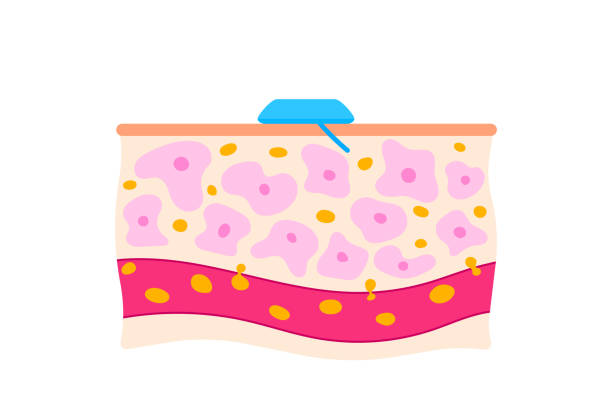
In a world saturated with beauty standards, cultural biases, and a vast commercial industry built on categorization, the search for a single, unifying principle for all skin tones can seem futile. We are taught to see difference: to label as fair, olive, ebony, or tan, and to select products and practices accordingly. Yet, beneath this spectrum of melanin, from the palest ivory to the deepest mahogany, there exists a fundamental, biological universal. The rule for all skin tones is not about color itself, but about the organ’s primary, unifying purpose: skin is a barrier, and its universal health is paramount. Regardless of hue, all skin functions as a dynamic, living shield, and its optimal condition is achieved through protection, respect, and nourishment tailored to its inherent needs, not merely its appearance.This universal role as a barrier is profound. Every person’s skin, irrespective of tone, serves as the first line of defense against pathogens, regulates body temperature, prevents dehydration, and endures environmental assault. The melanin that provides pigmentation is, itself, a key part of this protective system, absorbing and dispersing ultraviolet radiation. However, the presence of more melanin does not equate to invulnerability, just as less melanin does not signify weakness. It signifies difference in how the universal threat—primarily from the sun—is managed. Thus, the first corollary to the universal rule is that sun protection is non-negotiable for everyone. The consequence of exposure varies; lower melanin levels correlate with higher risk of sunburn and certain cancers, while higher melanin levels, though more protected from burning, remain susceptible to photoaging, hyperpigmentation, and still face cancer risk, often with later diagnosis. The universal act is not seeking a tan or avoiding the sun entirely, but practicing intelligent, daily shielding to preserve the barrier.Furthermore, the health of this barrier is maintained through consistent and gentle care, a second universal principle. Every skin type, across all ethnicities, possesses an acid mantle and a lipid barrier that can be compromised by harsh practices. Over-cleansing, using abrasive physical exfoliants, or applying irritating ingredients disrupts this delicate ecosystem, leading to inflammation, dryness, sensitivity, or exacerbated conditions like eczema or acne. The universal practice, therefore, is a regimen of gentle cleansing, effective hydration, and targeted moisturization to support the skin’s natural functions. What constitutes “effective” will vary—oilier complexions may prefer lighter humectants, while drier skin may require richer emollients—but the goal of maintaining barrier integrity is constant.Finally, the universal rule demands a shift from a paradigm of correction to one of respect. For decades, beauty marketing has framed certain skin tones as ideals to be achieved, promoting damaging bleaching agents for darker skin or risky tanning beds for lighter skin. The true universal rule rejects this. It acknowledges that hyperpigmentation, ashiness, rosacea, or keloid scarring are not failures of a
skin tone but conditions of a skin organ that require understanding and care. The focus becomes managing health and inflammation, not pursuing an arbitrary color standard. It is recognizing that conditions like vitamin D synthesis needs may vary with melanin levels and geography, but the necessity of the nutrient itself is universal.Ultimately, the universal rule for all skin tones transcends color to address the organ’s common humanity. It is a rule of physiology, not aesthetics. By prioritizing barrier health through diligent protection, gentle nourishment, and a mindset of respect for the skin’s inherent design, we honor the profound unity beneath our beautiful diversity. Our skin tells the unique story of our ancestry in its shade, but it whispers the same biological story of protection and resilience in its very existence. Caring for it with this truth in mind is the most universal practice of all.