You’ve got a routine that finally works. Cleanser, moisturizer, a little something for the fine lines at the corners of your eyes. Then one morning, you wake up to find a throbbing, angry red spot on your chin. Not a cute little whitehead. A deep, under-the-surface thing that seems to have unpacked its bags. And it’s not a one-off. Your jawline is starting to look like a treasure map of new bumps. Welcome to perimenopause, where your skin decides to rewind a few decades and punish you with breakouts you haven’t seen since high school.
This isn’t your fault, and it’s definitely not about being dirty or eating the wrong chocolate. Your body is going through a slow, messy transition. Estrogen and progesterone are starting to wobble and dip, and because they’re not keeping their usual level, your skin’s oil glands get confused. They start producing more sebum in some spots, less in others, but the real trick they pull is making your skin cells stick together longer than they should. Dead cells that used to shed neatly now hang around, mix with that extra oil, and clog your pores. So you get blackheads, whiteheads, and those awful blind pimples that never come to a head but hurt every time you smile.
The first urge is to go back to the harsh treatments you used at twenty. A ten percent benzoyl peroxide wash, astringent wipes, maybe a good long scrub with apricot seeds. Please resist that urge. Your skin in perimenopause is not the same membrane it used to be. It’s getting thinner and losing some of its padding. Collagen production is slowing down, and your moisture barrier is more fragile. If you attack the oil like a teenager, you’ll strip away what little hydration you have, make your skin red and tight, and actually trigger more oil production to compensate. You’ll end up with the worst of both worlds: flaky, irritated skin covered in fresh breakouts.
Instead, think of your face as a picky houseguest. It wants attention, but not rough handling. Start with a gentle cleanser that doesn’t foam up like a dish soap. Look for something with a milky texture or a low dose of a clarifying ingredient like salicylic acid, but not in every single product you own. The thing about perimenopausal skin is that it can’t handle the same kind of layering assault from your old acne arsenal. You want to treat the spots without nuking the surrounding territory.
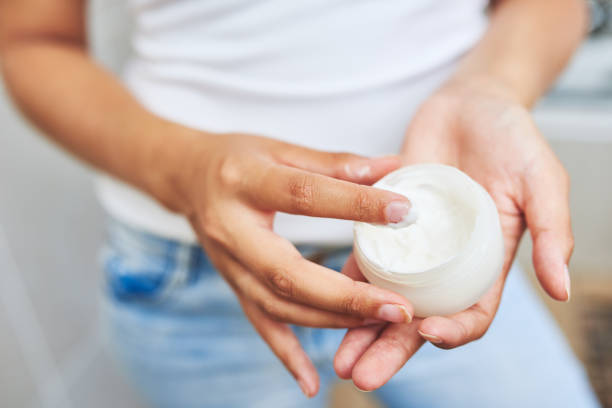
One smart move is to switch to a non-comedogenic moisturizer that’s richer than your usual one. Yes, richer. Counterintuitive, right? But when your skin feels clogged, it’s often actually a sign that your barrier is struggling to hold water. A good moisturizer with ingredients like ceramides or niacinamide (nothing fancy, just things that are already in your body) helps your skin calm down and stop overproducing oil in panic mode. If you put on a lightweight gel and it feels dry within an hour, that’s a clue you need something more substantial, especially overnight.
For the actual pimples, be surgical. Don’t scrub the whole face trying to hit one bump. Use a spot treatment with benzoyl peroxide, but only directly on the offending area, and don’t leave it on for hours if you start to see flaking. Or try adapalene, which used to be prescription-only but is now available at the drugstore. That stuff is magical for the deep, painful bumps because it helps cells shed normally. But here’s the catch: adapalene can be drying, so you have to start slow. Apply a pea-sized amount every other night for a week or two, and always, always follow with a nice moisturizer. And sunscreen in the morning, because your skin is becoming more sensitive and a lot of actives make it worse.
There’s also the issue of timing. Your breakout pattern might not match what it used to be. The week before your period always had its own little map, but now it’s less predictable. Keep a notepad or a mental log of when the bumps show up. You might notice they cluster when your cycle gets longer or skips entirely. That’s your clue that it’s hormonal, which means it won’t fully go away with a perfect at-home routine. You might need to talk to a dermatologist about prescriptions like a low-dose oral medication that balances those hormones, or a cream that doesn’t mess with your whole face.
Don’t let the breakout spiral into a new source of stress. Stress itself makes your body produce a specific hormone called cortisol, which can also trigger oil and inflammation. So yes, the existential dread of getting a wrinkle and a zit at the same time is real. But know that this phase is temporary. Your skin will eventually settle into its postmenopausal state, which for many women ends up less oily and oddly more comfortable. In the meantime, treat yourself like a smart adult who knows that sometimes you have to adjust the plan when the circumstances change. Wash gently, moisturize generously, spot-treat carefully, and maybe switch to a silk pillowcase while you’re at it. Not because it fixes everything, but because it feels nice. And you deserve that.