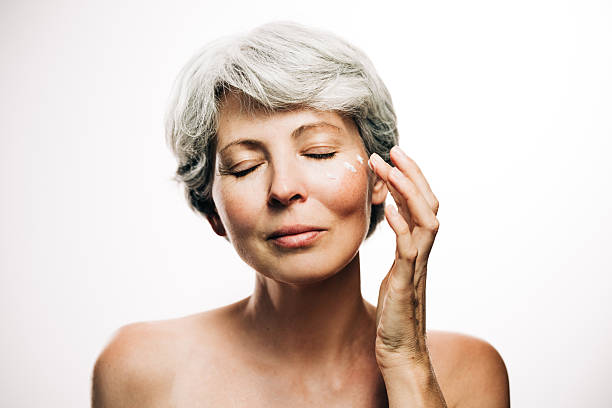
You’ve done the whole routine—the vitamin C in the morning, the retinol at night, the SPF religiously applied. And still, one morning you catch yourself in the bathroom mirror and notice something else. It’s not just a crease around your mouth or a tiny line under your eye. It’s the overall look. Your cheeks seem flatter. Your jawline isn’t as crisp. The space around your eyes looks a little hollow. You ask, “Did I lose weight?” No. “Is it just gravity?” Not exactly. The truth is that after menopause, your face doesn’t just get wrinkles. It changes shape. And once you understand why, you can work with that change instead of fighting a losing battle.
Think of your skin like a couch. The fabric—the outer layer—gets a lot of attention. But what keeps that couch looking good is the frame underneath, the padding, and the stuffing. That’s what menopause starts quietly rearranging. The first big shift is in your bones. Yes, bones. The same bone loss that makes you worry about your hips and spine also affects your face. The jawbone, the cheekbones, and the bone around your eye sockets slowly begin to shrink. So that sturdy couch frame gets a little smaller. Then the fat pads—the soft cushions that give your face its plump, youthful fullness—start to slide down, thin out, and shift. The cheeks lose their volume, the temples get a bit scooped out, and the area under your eyes can look flatter. On top of that, your skin itself gets thinner and less stretchy because you’re making far less collagen and elastin. It’s like the couch cushioning has deflated, the springs have loosened, and the fabric has gotten a bit baggy all at the same time.
That’s why you can slather on every firming cream and still see your jawline softening. It’s structural, not just surface. But here’s the thing: you aren’t helpless. You just need to shift your strategy from “erase lines” to “support the build.”
Start with your bones. Weight-bearing exercise—like brisk walking, jogging, light strength training, or even dancing—tells your body to keep making bone. It’s not just good for your skeleton; it keeps the architecture of your face from shrinking faster than it should. Pair that with enough protein and vitamin D. Your skin and bones are both made of protein, and after menopause your body is less efficient at using what you eat. Aim for a solid serving of protein at every meal—eggs, Greek yogurt, beans, chicken, fish. Think of it as giving your face the building blocks it needs to hold its own.
Next, treat your skin like the supportive layer it still can be. That means hydration goes beyond a misting spray. A moisturizer with ceramides or glycerin helps keep the outer layer plump so it doesn’t fold into deep creases as easily. And although you might be tempted to skip the heavy stuff, a slightly richer night cream can make a real difference when your skin is going through this thinner, drier phase. Look for products with peptides or bakuchiol if retinol feels too harsh. They support the collagen you still have, without the peeling and irritation that many women suddenly find they can’t tolerate anymore.
Your temples and cheeks might be losing volume, but that doesn’t mean you should go hunting for a filler syringe. Not yet. What you can do is pay attention to your facial expressions. Consider this: every time you squint, frown, or press your phone between your shoulder and ear, you’re putting pressure on skin that’s already less springy. That pressure deepens lines faster than before. So catch yourself. Wear sunglasses outdoors to avoid squinting. If you use a straw, maybe reconsider—the puckering motion grooves into your mouth area more easily now. And when you sleep, try to stay on your back. Side-sleeping and stomach-sleeping literally squish your face and create permanent folds once the rebound is slower.
One of the most overlooked pieces of the structural puzzle is stress. Cortisol, the stress hormone, breaks down collagen and bone—two things you’re already losing. So build small habits that actually dial down your nervous system. A ten-minute walk after dinner, singing along to a favorite playlist, calling a friend who makes you laugh, or even just doing a slow, annoying-but-effective breathing exercise before bed. It’s not fluffy new-age stuff. It’s chemical. Lower cortisol, save your collagen.
Finally, lower your expectations about “fixing” everything. That might sound defeatist, but it’s actually liberating. You’re not going to look like your twenty-five-year-old self, and you don’t need to. What you can do is firm up the structure you have, keep your skin nourished, and let your face tell the story of a woman who’s been through some stuff and knows how to take care of herself. That look—the one where someone says “you just seem so put together”—comes from that grounded confidence more than any cream.
So the next time you flip up your mirror and feel a pang about your changing shape, remember the couch. The frame is still solid. You’ve just got to restuff and re-speak to it. Eat the protein. Keep moving. Wear the SPF. And go easy on yourself while you’re at it.