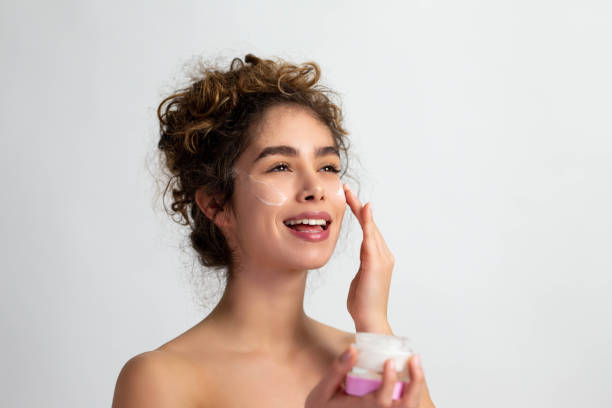
You’ve got that lovely medium complexion – the kind that tans easily, rarely burns, and lets you get away with a bit more sun than your fair-skinned friends. But here’s the thing nobody tells you: that same melanin richness that gives you your glow is also the reason you’re fighting dark spots, uneven patches, and yes, eventually, deeper wrinkles in those exact same areas. It’s not fair, but it’s totally manageable. And once you understand the connection, you’ll actually have a huge advantage in your anti-aging game.
Think about what happens when you get a little too much sun or even just everyday exposure. Your skin’s defense system kicks in, producing extra melanin to absorb the UV rays. On lighter skin, that shows up as a flush of pink or a light tan. On yours, it shows up as concentrated patches – a stubborn spot here, a shadowy area near your cheekbone, a faint discoloration above your lip. That’s called hyperpigmentation, and it’s not just a cosmetic nuisance. It’s a snapshot of where your skin has been under stress. And stress, as you know, ages you.
Here’s the deeper story. Sun exposure triggers two separate processes in your skin at the same time. One is pigment production, which is your skin’s way of putting up an umbrella. The other is collagen breakdown, which is the elastic protein that keeps your face plump and smooth. When UV hits your skin, it damages the collagen fibers, and your skin tries to repair that damage. The pigmentation you see later is actually a marker of the inflammatory response that also, silently, is degrading your skin’s structure. So that dark spot on your forehead isn’t just a spot. It’s a little billboard that says, “Collagen damage happened here.” Girls with medium skin often focus on lightening the spot, but they forget to address the wrinkle that’s forming right underneath it.
This is why your skincare routine should be built around a simple two-step mantra: prevent the trigger, then repair the aftermath. The trigger is UV light. All of it – UVA, UVB, and even visible light in the high-energy blue range. Your medium skin is more sensitive to visible light than fair skin, which means you need a sunscreen that does more than block UV burn. Look for a broad-spectrum SPF 30 or higher that also contains iron oxides or tinted mineral filters. These block the specific wavelengths that cause those stubborn pigment patches. You’ve heard this a million times, but for your skin type, it’s non-negotiable. Not just on sunny days, but every day, even when you’re sitting by a window or driving. Those little daily hits are what turn into a chronic pigment issue down the line.
Now for the repair side. You want ingredients that work overtime without being harsh. Retinol is your best friend here, but start slow. A pea-sized amount a few nights a week helps speed up your skin’s cell turnover, which both fades dark spots and prevents fine lines from settling in. The trick is to pair it with a moisturizer that supports your skin barrier, because medium skin can get easily inflamed – and inflammation makes pigment worse. Niacinamide is a superstar for you. It calms that inflammation, interrupts the signal that tells your skin to over-produce melanin, and strengthens your barrier so the retinol can do its job. Vitamin C in the morning is another smart layer – it’s an antioxidant that neutralizes the free radicals from sun exposure and also helps brighten those dark patches over time.
Your impulse might be to reach for aggressive peels or harsh scrubs to scrub those spots away. Don’t. That’s the fastest way to trigger more pigmentation. Your skin responds to injury by making more melanin, not less. So treat it with respect. Gentle exfoliation with a lactic acid or a low-strength glycolic once or twice a week is plenty. And always give your skin a rest day. The goal isn’t to strip your face; it’s to guide it toward a more even, resilient state.
Here’s what that looks like in real life. You cleanse gently, apply your vitamin C in the morning, follow with a moisturizer that contains niacinamide, and finish with a tinted SPF. At night, you cleanse, apply a small amount of retinol every other night, and seal it all in with a simple, rich moisturizer. Two weeks in, you’ll notice your makeup goes on smoother. A month in, those spots look lighter. Six months in, you’ll realize you haven’t wanted to hide behind foundation – and the fine lines around your eyes and mouth that used to bother you? They’re softer, because you’ve actually been repairing that collagen the whole time.
The beauty of having medium skin is that you age differently than fair skin – you just have a different set of rules. Once you stop treating pigment as your only enemy and start seeing it as a clue to what’s happening deeper in your skin, you become unstoppable. Sun protection isn’t just about avoiding spots. It’s about preserving every bit of that natural structure you have. And every day you stay consistent, you’re not just fading a dark mark. You’re preventing the wrinkle that was heading right for it.