You probably think about sun damage, maybe about smoking, and often about moisturizer. But there’s a sneaky little thing you do every single day, dozens of times, that’s quietly carving deep lines into your neck, jaw, and yes, even your forehead. It’s the way you look down at your phone. That bent-head, forward-screen posture is called “tech neck” in some circles, but you don’t need a label to understand the result: creases that start as temporary folds and eventually stay for good. The good news is that you can stop this right now, before those lines become permanent, simply by changing a few small actions.
When you tilt your head forward to text or scroll, your chin drops and your neck skin bunches up. Think about what happens to a shirt when you bend your elbow – the fabric wrinkles at the crease. Your skin does the same thing. The more often you hold that position, the more your skin gets a repeated fold line, and over time, the collagen and elastin in that area break down under the constant pressure. This is why you see those horizontal rings across the neck, sometimes called “necklace lines,” and why the skin under your jaw starts to sag or look crepey in your thirties, not your fifties. You might think it’s just natural aging, but a huge part of it is your phone habit.
The same goes for your face. Squinting at a bright screen or frowning at a difficult email pulls your brow muscles together. After hundreds of thousands of repetitions, those expressions train tiny grooves into your forehead and between your eyebrows. You’ve seen women in their twenties already developing a “11” line between their eyes? That’s not genetics alone. That’s the daily grind of staring at a small glowing rectangle.
So what do you do? Start by bringing the phone up to eye level, not dropping your head down to the phone. It feels awkward at first, but it’s the single most effective way to prevent those deep lines from forming. When you’re sitting at a desk, prop your phone on a stand or stack of books so you don’t have to look down. If you’re reading in bed, use a pillow behind your back and another on your lap to raise the book or tablet. This simple shift keeps your neck long and your chin away from your chest, which means the skin doesn’t bunch.
Another snappy fix: be aware of your jaw. When you tilt your head back slightly, you’ll feel your jawline tighten and your neck smooth out. That’s the posture you want to hold, not just when you’re on your phone, but whenever you’re working on a laptop or watching a show. The position also helps you look more awake and confident, which is a lovely bonus.
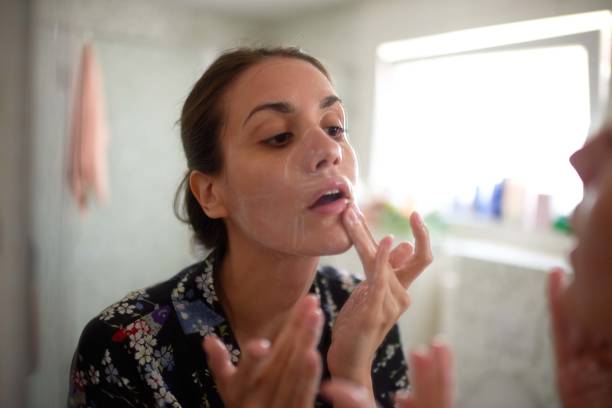
Now, let’s talk about your skincare routine as damage control. Even with better posture, you’ll still bend down sometimes – life happens. That’s where early intervention steps in. Hydrating your neck and chest is just as important as your face, but most women stop moisturizer at their jawline. Give your neck some love every morning and night. Use the same moisturizer or serum you use on your face, and apply it in upward strokes. This doesn’t “lift” anything, but it does keep the skin plump, so those temporary folds bounce back rather than settling in. Look for ingredients like hyaluronic acid (its job is to hold water) and peptides (they help support collagen). You don’t need a fancy neck cream – just don’t skip this area.
Also, add a little facial relaxation to your day. When you notice you’re squinting, stop and consciously soften your eyes and forehead. You can even set a reminder on your phone that says “relax face.” It sounds silly, but it’s a mirror of what dermatologists call “expression habits.” You’re basically pre-training your muscles to stay smooth. Another trick: use your phone’s screen brightness and font size to reduce squinting. Bigger text, less strain, fewer lines.
One more thing about sleep – think about your pillow. If you sleep face down or curl into a tight ball, your face gets pressed into the pillow all night. That’s eight hours of constant creasing. Switch to a softer pillowcase (silk or satin) so your skin slides instead of bunches, and try to sleep on your back. It’s not easy at first, but you can train yourself by putting a light wedge behind your pillows. Early intervention means catching these habits before they become permanent etchings, and your future skin will thank you.
You don’t need drastic measures or pricey treatments to stop deep lines from forming. You just need to respect the mechanics of your own face. Hold your phone up, stretch your neck, hydrate all the way down, and stop squinting. That’s it. These tiny changes are cheap, easy, and completely within your control, and they’ll save you from looking back in ten years wondering when those lines got so deep.