Let’s be honest: you didn’t sign up for a job that slowly dehydrates your face. But you walk into your office every morning, and there it is—the air conditioner roaring like it’s trying to preserve a museum exhibit. The temperature is set to “meat locker,” the humidity is lower than a desert at noon, and your skin is the first casualty. You’ve noticed it by 10 a.m. Your cheeks feel tight. Your forehead looks slightly creased when you catch your reflection near the printer. And by 3 p.m., that little line between your brows has settled in like it pays rent. That’s not your imagination. That’s office AC actively working against your skin.
Here’s the simple science, minus the lecture. Air conditioning pulls moisture out of the air. Your skin, being a smart sponge, tries to balance things out. When the air around you is dry, moisture evaporates from your skin’s surface much faster than normal. The top layer, which acts like a barrier, loses its flexibility. Fine lines and creases become more visible because dehydrated skin doesn’t bounce back as quickly. Over time, repeated dehydration pushes those temporary expression lines into permanent ones. So every time you squint at a spreadsheet, your skin is a little less able to recover. It’s not aging you fast in a dramatic way—it’s aging you in slow, tedious, office-hour increments.
You might be thinking, “Great, so I’ll just drink more water.” And yes, please do—hydration from the inside matters. But it’s not enough. Your skin’s outer layer needs direct help. The real fix is to treat your office like you would treat a long flight in cabin pressure. You wouldn’t board a six-hour flight without moisturizer, would you? No. So don’t clock in without a strategy.
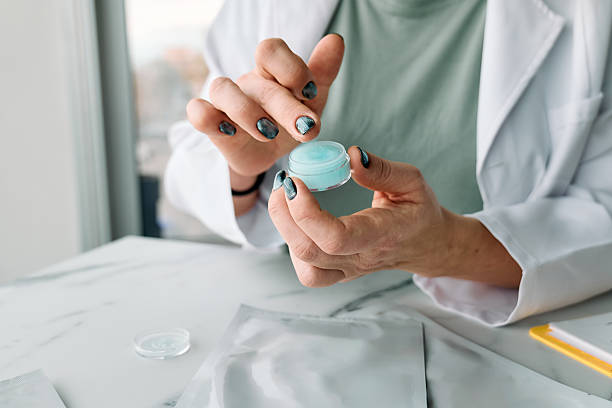
Start with your morning routine. Before you apply anything else, use a hydrating toner. Not the kind that stings with astringent alcohol. Look for something milky or watery with a simple ingredient like glycerin or hyaluronic acid. Pat it on. Don’t rub. Then layer a lightweight essence or serum—nothing heavy, just a few drops that sink in quickly. After that, apply a moisturizer with a bit of staying power. The goal is to create a moisture stack that sits on your skin like a thin, flexible film. It won’t feel greasy under your makeup if you give each layer a minute to absorb.
But here’s the trick most people skip: after you’ve done your morning moisturizer, you’re not done. Your office AC will start eating through that barrier by noon. So keep a small facial mist at your desk. Not one that just sprays water on your face—that can actually make things worse by evaporating and taking more moisture with it. Instead, use a mist that has a few humectants in the formula. During your afternoon break, give your face a light spritz, wait 15 seconds, then press your palms gently over your face to seal it in. If you can, carry a tiny tube of your moisturizer and pat a dab over your cheekbones and forehead after the mist. That two-second move gives your skin a fresh shield.
Now, about your eyes. The skin around your eyes is thinner and has fewer oil glands, which means it dries out first. Your office AC is basically a wrinkle accelerator for your under-eye area. Don’t just rely on eye cream in the morning, either. After lunch, use a clean fingertip to press a small amount of eye cream or a plain facial oil under your eyes. Use your ring finger, tap gently, no smearing. This keeps that delicate area from developing crepey texture and deepetle lines by the end of the day.
Also, think about your seating position. If you have control over your chair, avoid sitting directly under a vent. That’s like pointing a hairdryer at your face—except it’s cold and it never turns off. If you can’t move your desk, at least angle your chair slightly so the airflow hits your shoulder instead of your forehead. And if there’s a tiny desk humidifier that fits near your monitor, get one. A small, quiet one that releases a gentle mist into your immediate bubble can raise the humidity around your face significantly. You don’t need a giant machine. Just something to keep the air next to your desk from feeling like a desert.
One more thing: touching your face. When your skin feels tight, you’ll naturally want to rub your temples or press your cheek against your palm. That friction and pressure breaks down collagen over time, especially when the skin is already stressed. Instead of touching, spray, tap, and then keep your hands busy with a stress ball or your keyboard. Train yourself to notice when your hand creeps upward.
The good news is that office AC damage isn’t permanent. Once you start actively counteracting the dryness, your skin rebounds. Those lines that showed up at 3 p.m. will start staying away longer. You’ll notice that your makeup stays on smoother, your face doesn’t feel like a cracker by happy hour, and your reflection in the elevator mirror looks a lot less tired. The key isn’t a complicated ten-step ritual. It’s just being smart about the environment you spend eight hours in. Moisture in, moisture out—and keep the AC from winning.