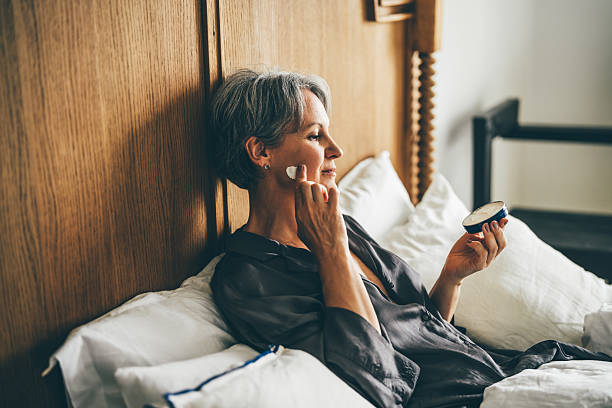
Let’s be real for a second. You probably spend a good chunk of money on fancy creams, serums, and maybe even those little facial rollers you see on Instagram. You wash your face every night, apply your moisturizer, and hope for the best. But here’s something you might not have thought about: the way you sleep. That’s right. While you’re dreaming, your face is getting squished into a pillow for seven or eight hours. And over time, that can cause wrinkles that no cream can fix.
I’m talking about sleep wrinkles. Ever wake up with lines on your cheek or around your mouth that take a while to fade? Those are temporary creases from pressing your face into the pillow. But if you sleep on your side or your stomach every single night, those creases can turn permanent. Think of it like ironing a shirt. If you press the same fold over and over, it eventually stays. Your skin works the same way. The more you put pressure on one spot, the more that area loses its ability to bounce back.
Sleep wrinkles are different from the ones you get from smiling or squinting. Those come from muscle movement. Sleep wrinkles come from gravity and pressure. And the bad news is, they often show up in places you don’t expect, like the middle of your cheek or along your jawline. They can even cause lines around your eyes that look like crow’s feet but are really from squishing your face sideways.
So what’s the fix? The simplest change you can make is to start sleeping on your back. I know, it sounds harder than it is. If you’ve been a side sleeper your whole life, flipping over can feel weird. But it’s worth it. When you sleep on your back, your face isn’t pressed against anything. Gravity pulls everything evenly, so no one spot gets crunched. Plus, sleeping on your back helps with puffiness. Fluid can drain more easily, so you wake up with less eye bags and a smoother look.
Now, I’m not saying you have to turn into a stiff board all night. Nobody sleeps perfectly still. But you can train yourself to stay on your back longer. One trick is to use a pillow that keeps your head and neck in a good position. A memory foam pillow with a little dip in the middle can help. You can also put a couple of pillows on either side of you, like bumpers, so you don’t roll over as easily. Some women even use a special travel pillow that wraps around their neck, kind of like the ones they use on airplanes, to keep from turning.
If you absolutely cannot sleep on your back, there’s a backup plan. Get yourself a silk pillowcase. Silk is much smoother than cotton, so when you do turn your face, the fabric slides instead of rubbing. That reduces the friction and the pressure creases a little bit. But honestly, silk is a band-aid, not a cure. The real win is back sleeping.
I get it. Changing your sleep position is about as fun as giving up coffee. But think of it this way: you’re already doing a night routine. You take off your makeup, you put on your moisturizer. Adding this one habit doesn’t cost a dime, and it works while you’re asleep. No extra steps, no expensive gadgets. Just a simple switch.
And here’s a bonus. Sleeping on your back is also better for your neck and spine. So you’re not just saving your face from wrinkles, you’re helping your whole body rest better. That means you wake up feeling more refreshed, and a well-rested person naturally has healthier looking skin.
Let me give you a little tip for making the change. Start by sleeping on your back for just the first part of the night. If you wake up on your side, that’s okay. Don’t beat yourself up. Every hour you spend on your back is an hour your face isn’t getting squished. Over a few weeks, your body will get used to the new position. Some women find that putting a small pillow under their knees helps take the pressure off their lower back, making back sleeping more comfortable.
Remember, prevention is way easier than trying to fix wrinkles later. Once those lines set in, no cream can erase them completely. You can only soften them. So if you want to stay ahead of the game, taking care of your skin at night means more than just what you put on it. It means how you treat it while you’re snoozing.
So tonight, try it. Lie flat on your back. Feel your face relax. No pillow digging into your cheek. No folded ear. Just your skin, free and smooth, getting a full night of zero-pressure beauty sleep. It might feel strange at first, but give it a week. Look in the mirror in the morning and see if your face looks less creased. I bet you’ll notice a difference.
Your skin works hard all day. Let it rest properly at night. That’s the real secret to keeping wrinkles away.