Retinol has a reputation. You’ve heard from a friend who peeled for a week straight, or read a review from someone who swears it wrecked her skin. But you’ve also seen the after photos: smoother texture, faded dark spots, fine lines that seem to soften almost overnight. Both things are true. The difference between the woman who quits after four days and the one who glows at month three usually comes down to one thing—how she started.
The mistake almost everyone makes is treating retinol like moisturizer. It isn’t. It’s a powerful active that changes how your skin renews itself, and your skin needs time to adjust. Going from zero to every night is the fastest way to redness, flaking, and a drawer full of abandoned products. The smarter approach is slower, and it works.
Start with the lowest strength you can find. Think of it as a first date, not a marriage. A gentle retinol serum or cream at a low percentage is plenty for the first month. You are not trying to feel it working. You are trying to teach your skin that it can handle it, one small exposure at a time.
Then apply it less often than you think you should. Once or twice a week is the right place to begin, even if the label says nightly. Space those nights out—Monday and Thursday, for example—and give your skin the days in between to recover and rebuild. If you sail through two weeks without tightness or peeling, add a third night. Then a fourth. The goal is to build up to every other night, and eventually every night if your skin wants it. That process can take two to three months, and that’s completely normal.
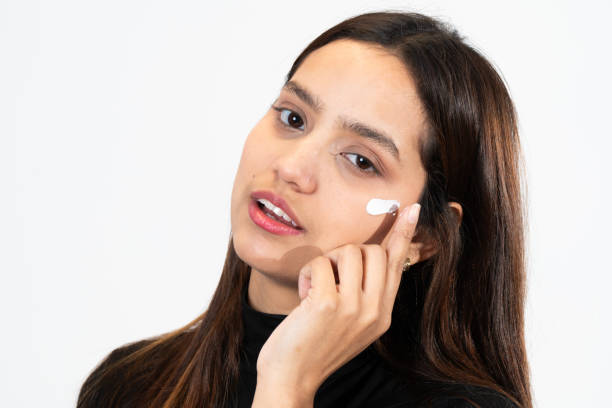
Use less product than feels satisfying. A pea-sized amount covers your whole face. Dot it on your forehead, cheeks, and chin, then spread it thin. More product does not mean better results. It means more irritation, and irritation is the enemy of progress. If your skin is on the sensitive or dry side, buffer it. Apply your moisturizer first, wait a few minutes, then apply the retinol on top. This slows down how quickly it sinks in and takes the edge off. Some women use this sandwich method for the first several weeks, then switch to applying retinol first once their skin settles down.
Expect some flaking around week two or three. It usually shows up around your mouth, nose, and chin, and it looks more like dry patches than actual peeling. Resist the urge to scrub it away. Scrubbing makes it worse. Instead, cut back to once a week for a few days, pile on a plain moisturizer, and let your skin catch up. If you’re red, stinging, or burning, stop entirely for a week. That’s not failure. That’s listening.
You also need to simplify everything else. Put your exfoliating acids, scrubs, and strong vitamin C on hold while you adjust. Your skin is already doing extra work. Don’t stack actives and then wonder which one caused the problem. Cleanser, moisturizer, sunscreen, retinol. That’s it for now.
And speaking of sunscreen, this is non-negotiable. Retinol makes your skin more sun-sensitive. If you skip sunscreen, you’re undoing the very thing you’re paying for. Every morning, no matter the weather, no matter how cloudy it looks outside.
Around week six, something shifts. The flaking stops. Your skin stops fighting back. By week twelve, most women notice smoother texture, a more even tone, and pores that look smaller. Fine lines around the eyes and mouth start to soften. It’s not dramatic overnight, and that’s the point. It’s the kind of change people notice without being able to say why.
There will be a moment—probably in week three—when you look in the mirror and wonder if it’s worth it. That’s the moment that separates the women who get results from the ones who don’t. Push through it carefully, adjust your pace, and keep going. Give it ninety days. Your skin will thank you.